











Building Filipino Legacy
Originally penned in 2006 by PAANC member David Barrow, this heartfelt piece captures the early spirit of the Philippine American Association of North Carolina as it grew from a handful of families into a vibrant community of over 100 households. We're excited to share it today to preserve and honor the rich history of Filipino immigration and contributions in North Carolina, ensuring these pioneering stories endure for future generations. By documenting milestones like the 1906 sakadas and local trailblazers such as Patricia Cruz, it reminds us of the enduring legacy being built one journey at a time.
The Philippine American Association of North Carolina this year celebrates the centennial of immigration from the Philippines to the United States. Numerous immigration laws have been passed and repealed since 1906, but the steady increase in the Filipino population in North Carolina has been a constant each year. As PAANC began with just a few families getting together socially, it is now an organization of over one hundred families that puts together cultural performances, fundraising events, and missions several times a year to give medical aid to the Philippines and China. Along with honoring the first immigrants who paved the way for them, many PAANC members have spent 2006 recalling their own journeys across the Pacific, as well as the work they have done to build the Filipino community in North Carolina.
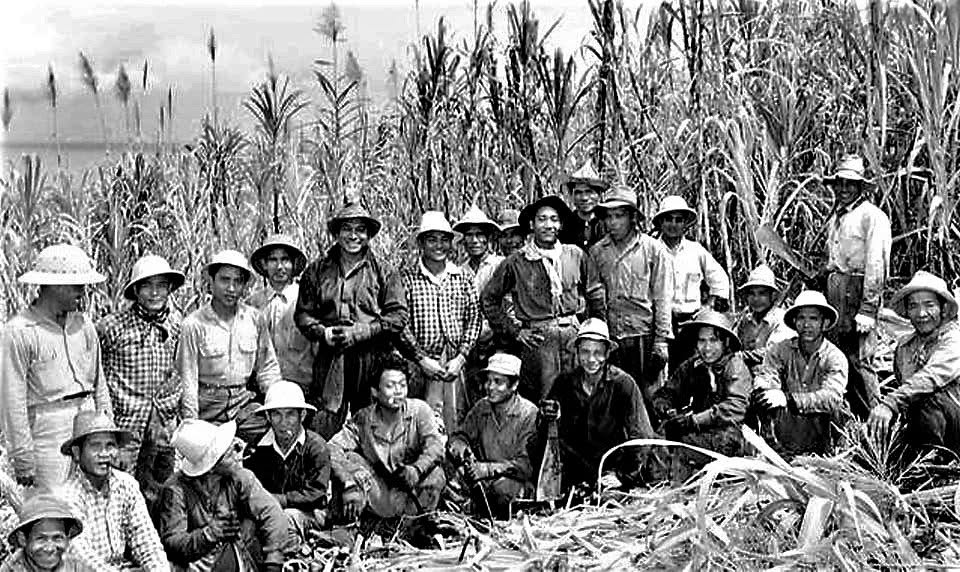
The history of Filipino immigration begins in the year 1906, when fifteen Filipino contract laborers, known as "sakadas," arrived in the then Territory of Hawaii to work on the islands' sugar plantations. They were not the first Filipinos to set foot on American soil (the first are thought to have arrived aboard a Manila galleon ship in Morro Bay, CA in the late 1500s), but they were the first to settle in the United States. That same year the first class of "pensionados" arrived from the Philippines, students who wished to receive American educations and then return to their homelands to put their educations to use. Since the Philippines was an American territory from 1898 to 1946, early immigrants were not given rights as American citizens. They were instead called American "nationals" until 1946, when President Harry S. Truman signed the Filipino Naturalization Acts allowing Filipinos to become natural citizens. Since 1906, there have been a handful of significant waves of Filipino immigration, resulting in a 2000 census totaling nearly 2.4 million Americans of Filipino ancestry now living in the country.
One of those waves of immigration began in 1941 and consisted of nurses, students, WWII veterans, WWII brides, and U.S. Navy men. Frank Cruz, an original PAANC member and current Membership Chair, was one of the men who left the Philippines to join the service. He began his career in San Francisco, CA in 1945 and went on to serve 28 years in the U.S. Navy. In the 1950s, his sister, the late Patricia Cruz, immigrated to the United States as part of a medical exchange program in Cleveland, OH. In1959 she transferred to Duke University Hospital in Durham, NC, where she would play an important role in uniting Filipinos in the area.
"There were hardly any Filipinos living in Durham when she arrived," Frank said. "She was one of the first to get things organized. She is the reason our family is here now."
In time, Frank's other two sisters, Siony and Chris, immigrated to Durham, and then Frank joined them in 1977. By this time the Filipino population in Durham had grown significantly. The Cruzes helped put together a local social organization that in 1983 merged with a similar group in Raleigh to become PAANC.
One of the members of the Raleigh group during the merge was Anita Ng, who had originally emigrated from the Philippines in 1962 as a student. After receiving her doctorate at the University of Delaware, Anita moved to Raleigh, NC, after her husband, Dr. Fred Ng, was offered a surgical position at Wake Memorial Hospital. While raising five children, she became involved in community outreach programs with her church. Once PAANC formed, Anita began working with fellow members, Drs. Arturo and Rosemary de Leon, to establish the Carolina Medical Mission, a program that would provide free medical treatment in the Philippines. In January of 1995, they flew to the Philippines for the first Carolina Medical Mission. The staff consisted of Arturo and Rosemary diagnosing and treating patients, Anita providing pharmaceutical services, the de Leons' son Jay doing triage, and a local dentist providing dental services. The next year Fred joined the team to provide surgical services. Since 1995, there have been four to six missions per year, with new volunteers signing on each time to help.
"The U.S. gave us a chance to improve our lives, but we owe it to our native land to alleviate some of the physical pain," Anita said. "Since we left the Philippines, it's gone downhill, and there are so many people living painful lives. We spend six months out of the year there now to do what we can."
Arturo and Rosemary, who also immigrated to the U.S. in the early 1960s, began their medical careers in Chicago before moving to North Carolina in the 1968. Like many other immigrants, it took a number of years for them to receive full citizenship. Once finally becoming citizens in 1976, they were able to fly home to the Philippines to visit family, not having been able to leave the U.S. for thirteen years. As the Filipino population began to grow during the late 1970s and early 1980s, Rosemary began to organize social events with other Filipino families in the area. In January of 1982, she helped begin the group that would merge with Durham to become PAANC.
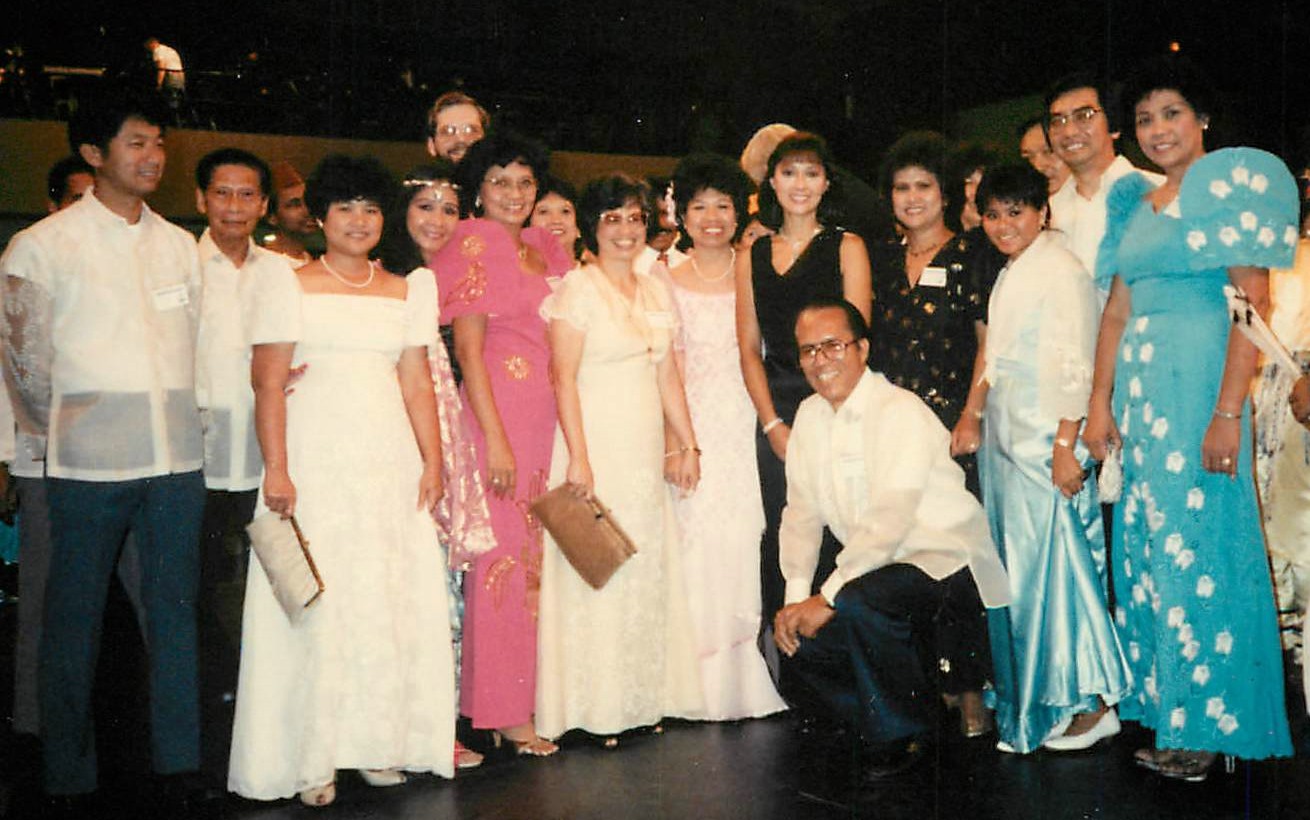
In 1983, PAANC's first fundraiser was the Christmas Gala, which provided ticket-buyers with a delightful evening of dinner and dancing. It was such a hit that it has become a PAANC annual event. In 2005 it attracted over one hundred people with all of the proceeds going to the Carolina Medical Mission. PAANC has been a part of the Raleigh International Festival since its origination in the 1980s, sharing Filipino dances and food with the public. Dancing is also performed in nursing homes, church functions, shopping malls, and schools over the course of the year.
For over twenty years, the Philippine American Association of North Carolina has worked with sister organizations in Charlotte, Fayetteville, and Greensboro to preserve the Filipino culture in North Carolina and to provide help to those in need. Like the original immigrants in 1906, many of PAANC's members chose to move to the United States for the opportunity to study and work better paying jobs. Many planned to move back to the Philippines, but as Arturo realized, moving back would have created "the same situation of no opportunity." Instead of leaving, the members of PAANC have started families and established a strong sense of community in North Carolina, using the opportunities and resources in their adopted land to provide much needed care and assistance to their native land.


